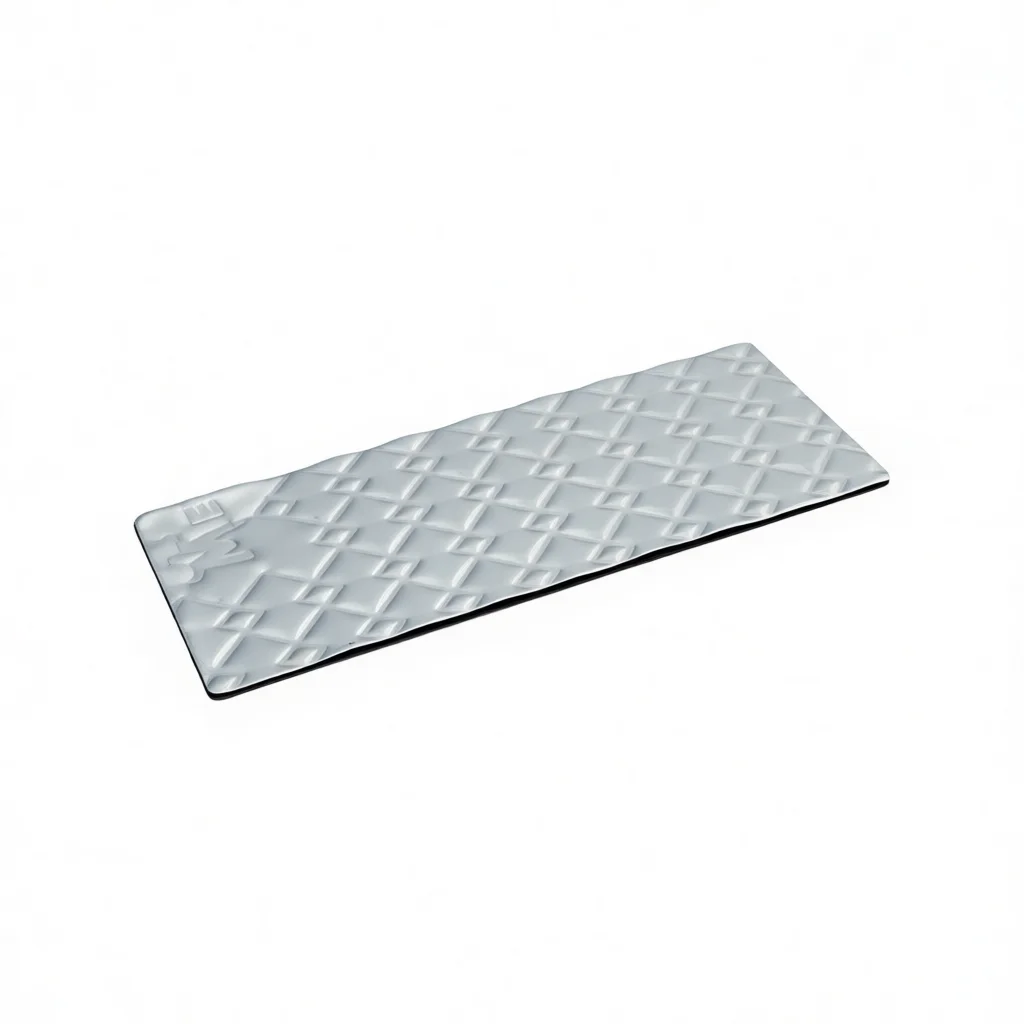
In the high-stakes world of autonomous maintenance and industrial cleaning, the efficacy of a machine is often judged by the last millimeter of contact. While the software provides the intelligence and the chassis provides the movement, it is the robot roller brush that performs the critical work of debris extraction. As engineering demands evolve, a sophisticated debate has emerged regarding the chemical composition of these components. While silicone once dominated the consumer market, the industrial and high-performance sectors are increasingly turning toward the NBR robot roller brush as the definitive solution for durability and mechanical consistency.
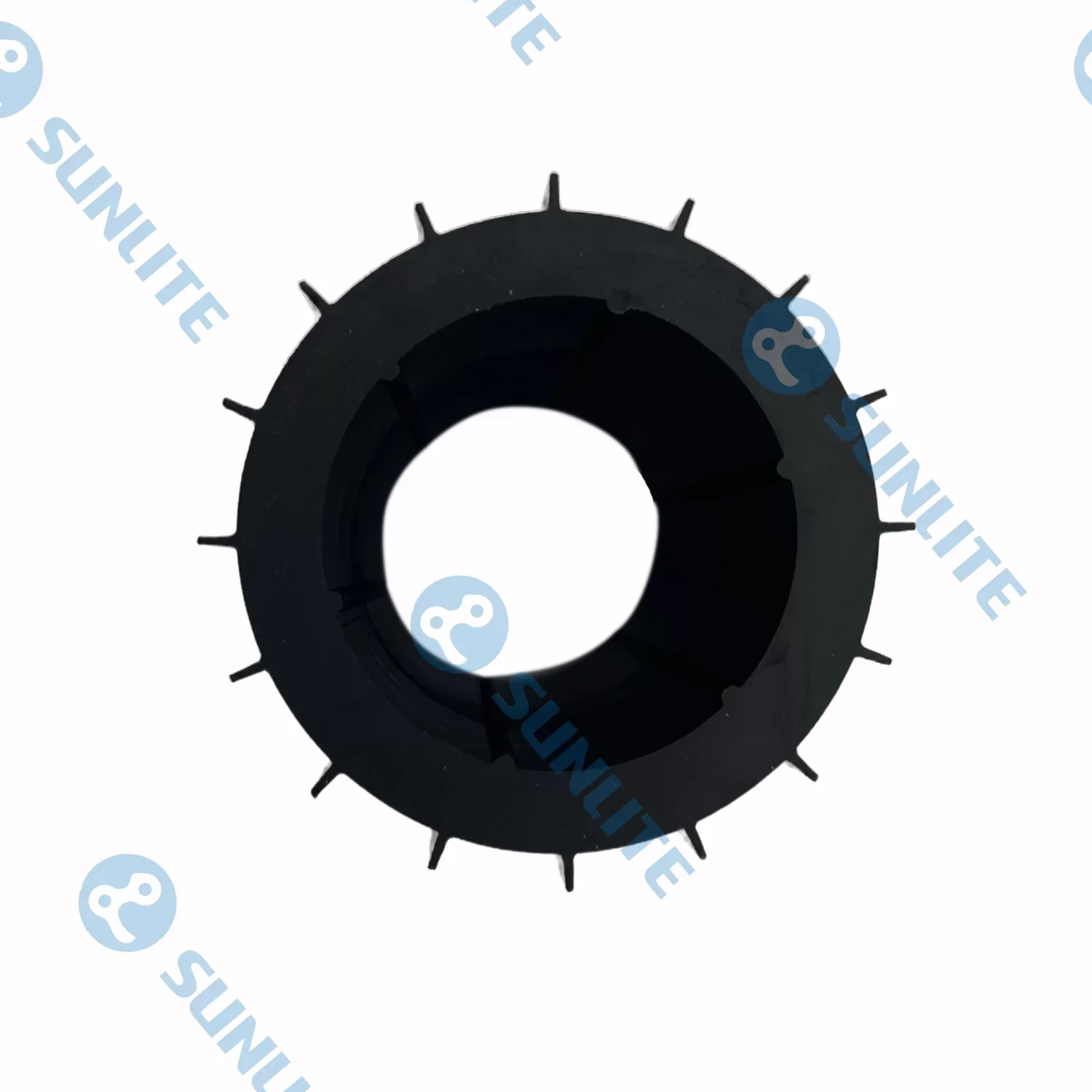
Chemical Composition and the Resilience of the NBR Robot Roller Brush
To understand why material selection is paramount, one must look at the molecular architecture of Nitrile Butadiene Rubber (NBR). Unlike silicone, which is an inorganic polymer, NBR is a synthetic rubber copolymer. This distinction is vital when discussing a rubber roller brush robot operating in environments contaminated with oils, greases, or harsh detergents. Silicone, while flexible, tends to swell and lose its structural integrity when exposed to petroleum-based substances.
In contrast, the NBR robot roller brush is specifically engineered for oil resistance. In a factory setting or a commercial kitchen where a robot must navigate slick surfaces, the NBR bristles or flaps maintain their "flick" and tension. This chemical resilience ensures that the robot rolling brush does not become "gummy" or brittle over time. By maintaining its original shore hardness despite chemical exposure, NBR allows the robot to maintain a consistent cleaning pressure, ensuring that the first sweep of the day is just as effective as the last.
Mechanical Friction and Wear Resistance in a Rubber Roller Brush Robot
The primary enemy of any roller brush for robot systems is abrasion. Whether the surface is rough concrete, industrial carpet, or hardwood, the constant high-speed rotation of the brush creates significant thermal and physical stress. Silicone is known for its high-heat resistance, but it often falls short in "tear strength." A single sharp fragment of glass or a jagged metal shaving can easily notch a silicone blade, leading to a rapid propagation of the tear across the entire brush.
The mechanical advantage of a rubber roller brush robot equipped with NBR lies in its superior tensile strength and abrasion resistance. NBR is a "tougher" elastomer, capable of withstand the shearing forces encountered when a robot rolling brush strikes a transition strip or a door threshold at high RPM. This durability translates directly into a lower total cost of ownership. Because the NBR material resists the rounding of its edges—the "dulling" effect that happens to inferior plastics—the brush remains effective at lifting fine particulates from deep crevices for a much longer operational window.
Optimizing Vibration Dampening with a Robot Roller Brush
Noise pollution and mechanical vibration are significant concerns in the design of modern service robots. A robot roller brush spinning at several thousand rotations per minute can act as a tuning fork, sending vibrations through the drive train and into the sensitive electronics of the mother unit. This is where the internal dampening properties of NBR provide a distinct advantage over harder plastics or even certain silicone formulations.
The inherent density of an NBR robot roller brush allows it to absorb the impact of debris strikes. When a roller brush for robot hits a heavy object, like a nut or a small stone, the rubber deforms and recovers rapidly, "muffling" the impact rather than transferring the shock into the motor shaft. This not only makes the robot significantly quieter—a crucial feature for hospital or hotel environments—but also protects the bearings and gearboxes from premature wear caused by high-frequency oscillation.
Surface Tension and Debris Release in Robot Rolling Brush Design
One of the most frustrating maintenance tasks for robotic systems is the "tangle." Hair, fibers, and long-chain polymers tend to wrap around a robot rolling brush, creating a friction-heavy mass that can eventually stall the motor. The surface energy of the material plays a key role in how easily these tangles can be removed or, better yet, prevented.
While silicone is naturally hydrophobic, it can sometimes develop a "static" charge that attracts fine dust. The specialized compounding of a rubber roller brush robot using NBR can include anti-static agents that prevent this accumulation. Furthermore, the surface texture of an NBR robot roller brush is often engineered to be slightly more "matte" than silicone, which reduces the surface-area contact with hair. This allows the centrifugal force of the robot roller brush to more effectively "throw" the debris into the suction inlet rather than allowing it to adhere to the core of the brush.
Thermal Stability and Kinetic Energy in Roller Brush for Robot Systems
Every roller brush for robot must deal with the heat generated by the friction of its own rotation against the floor. While silicone excels in extreme heat, it is often "over-engineered" for the temperatures seen in standard cleaning. NBR offers a more balanced thermal profile for standard and industrial cleaning. The kinetic energy generated by a robot rolling brush is efficiently managed by NBR, which maintains its "modulus of elasticity" across the typical operating range of 0°C to 100°C.
This thermal consistency is crucial for the "shape memory" of the brush. A robot roller brush that sits in one position for a long time might develop a "flat spot" if the material is too soft. NBR's resistance to compression set ensures that even after a long period of inactivity, the rubber roller brush robot returns to its perfectly cylindrical shape as soon as the mission begins. This prevents the "thumping" sound and uneven cleaning that plague robots equipped with low-quality foam or PVC brushes.
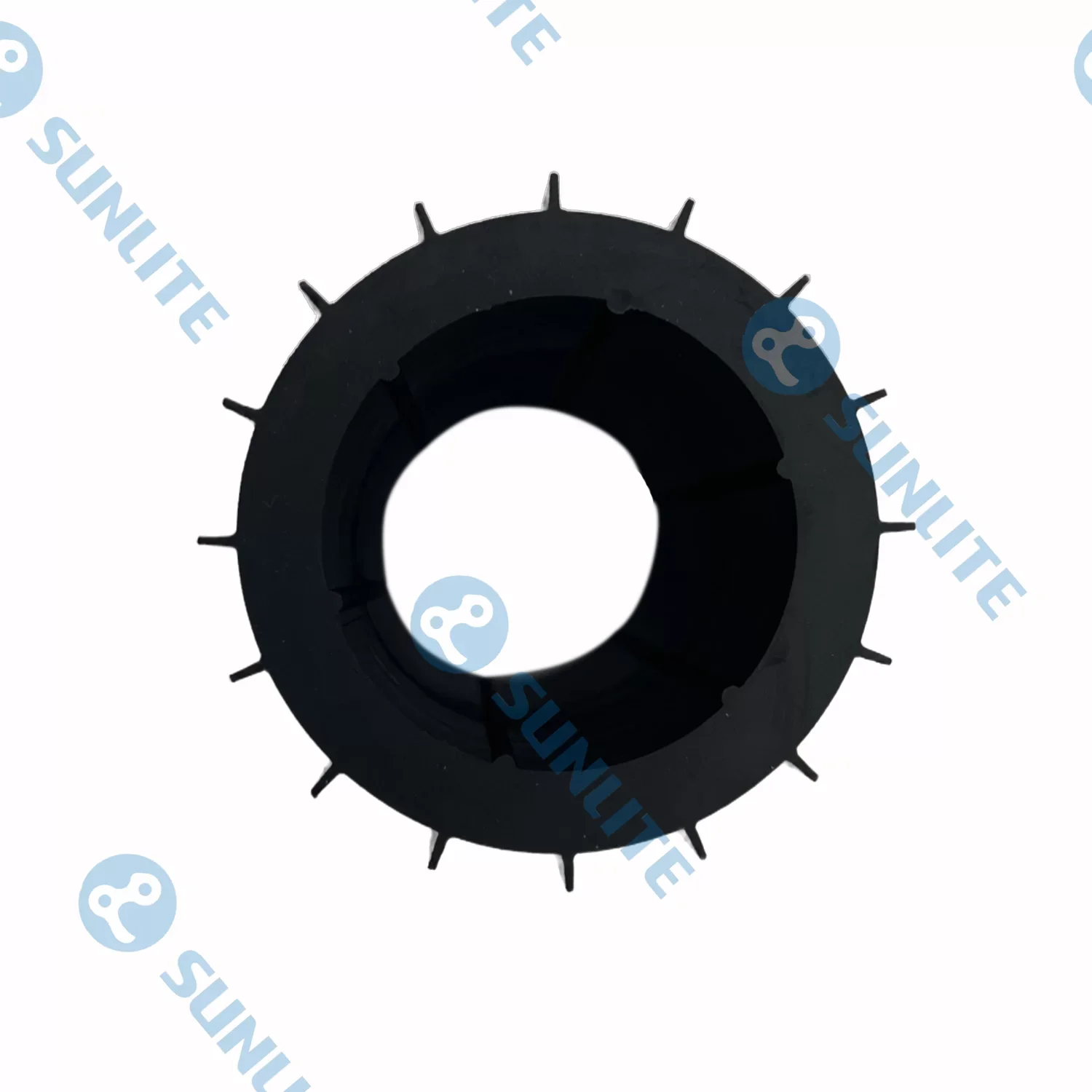
In the high-stakes world of autonomous maintenance and industrial cleaning, the efficacy of a machine is often judged by the last millimeter of contact.